SpaceX paid $60 billion for Cursor. One of the four people who built it grew up in Karachi.
One of the four founders behind the most expensive AI coding acquisition in history grew up in Karachi, studied at Nixor College, and represented Pakistan at the International Math Olympiad years before any of this happened.
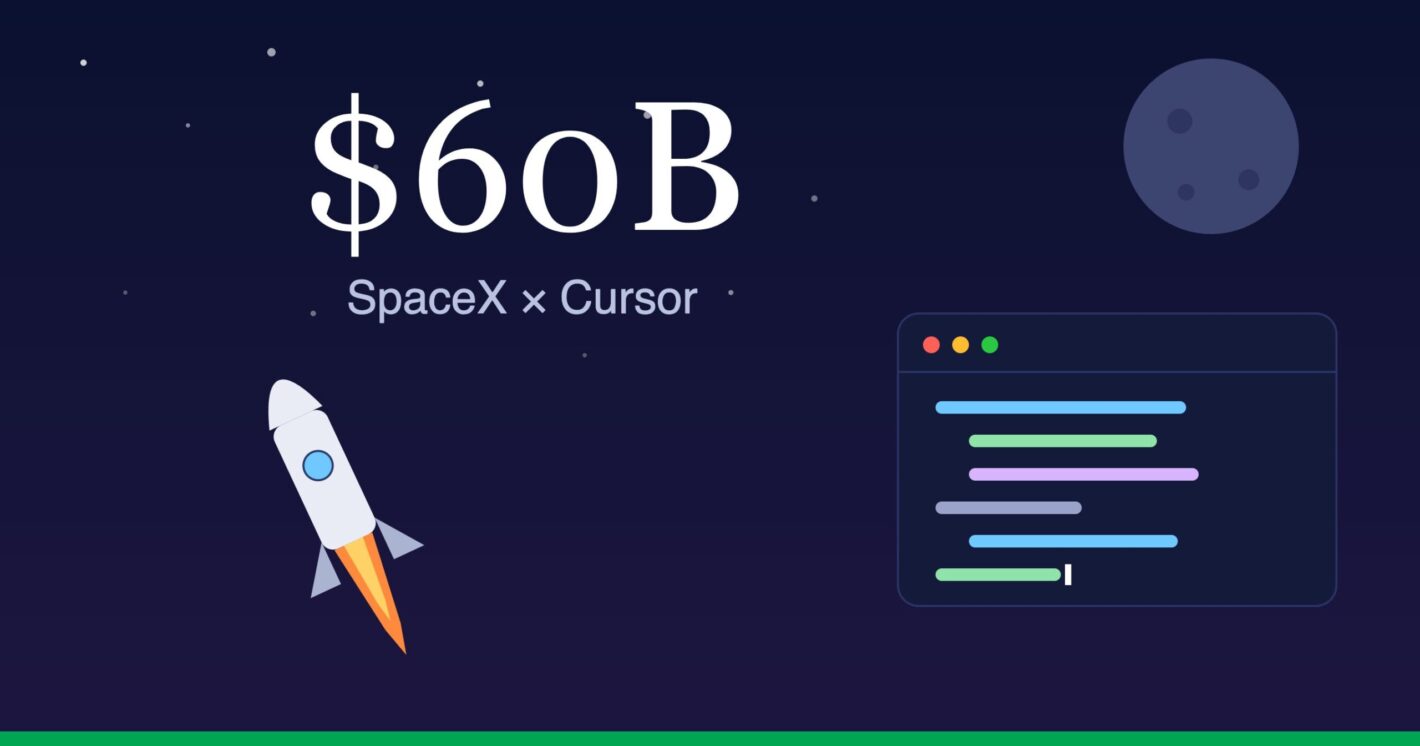
On June 16, SpaceX filed the paperwork that made it official: it is acquiring Cursor, the AI coding tool built by Anysphere, in an all-stock deal worth $60 billion. The deal had been rumored since April. Now it’s an SEC filing, not a tweet.
The deal, in plain terms
SpaceX isn’t writing a check. Under the merger agreement, a SpaceX shell entity called X67 merges into Cursor, which survives as a wholly owned SpaceX subsidiary. Cursor’s shareholders get paid in SpaceX Class A stock instead of cash, and the exact exchange rate won’t be locked until SpaceX’s average closing price over the seven trading days before closing is calculated. So the “$60 billion” tag is an implied value, not a fixed number — it’ll move with SpaceX’s stock price right up to the finish line.
That finish line is targeted for Q3 2026, and it’s still subject to regulatory approval, so this isn’t done yet.
Why the timing looks insane (and isn’t, really)
This landed days after SpaceX’s own IPO — the largest in history. SpaceX priced shares at $135 and watched them rocket past $200 within days, briefly pushing the company past Amazon and into a dead heat with Microsoft for fourth-most-valuable public company in the US. Going from “newly public” to “$60 billion acquisition” in under a week sounds reckless until you remember SpaceX just printed itself a mountain of stock it can spend like cash.
But this also wasn’t a fling. SpaceX disclosed back in April that it had already secured the right to either buy Cursor outright for $60 billion later in the year, or pay $10 billion just to keep working together if the acquisition fell through. That’s not a casual handshake — that’s a couple having already picked out a venue before announcing the engagement.
The fine print most coverage skipped
A few details buried in the filing are more interesting than the headline number:
If the deal somehow collapses, SpaceX is on the hook to pay Cursor a $1.5 billion termination fee, plus $8.5 billion worth of computing resources. That’s the cost of backing out — and it tells you how serious the prior commitment already was.
Thrive Capital holds positions in both SpaceX and Cursor. The combined stake is now worth north of $10 billion. Same investor, both sides of the table, one announcement that moved both holdings at once.
Before the merger agreement was even signed, certain Cursor shareholders entered “Revest Agreements” with SpaceX — retention arrangements tying compensation to staying on after the deal closes. Translation: SpaceX is paying as much for the engineers as for the product. The agreement also devotes unusual space to IPO-related scenarios — lockups, resale restrictions, public-market transfers — which has analysts wondering if SpaceX is quietly assembling a basket of AI assets with an eye on a future spinoff.
And there’s a genuine irony sitting in the middle of this: SpaceX recently signed separate data center deals with Anthropic and Google worth a combined $2.15 billion a month. So while it’s buying Cursor to compete in AI coding, it’s simultaneously renting compute from one of the rivals it’s trying to beat.
Why Cursor, specifically
SpaceX’s AI arm — built around xAI, which SpaceX absorbed in February — has been racing to keep pace with Anthropic and OpenAI in coding tools. SpaceX and Cursor have reportedly been jointly training a model on SpaceX’s Colossus supercomputer for months, with the output set to ship inside both Cursor and Grok Build.
But the numbers complicate the “Cursor is winning” narrative. Per spending data from Ramp, Cursor’s market share slid from 41% in June 2025 to roughly 26% by this past May — while Anthropic now controls about half that category. SpaceX is paying a record price for a company that’s been losing ground, betting that its compute and distribution can reverse the slide rather than evidence that the slide is already reversing.
What Cursor does have is real scale. Founded in 2022 by four MIT students, the company didn’t even ship its product until 2023. It crossed $1 billion in annualized revenue by November 2025 with around 300 employees, raised a $2.3 billion Series D at a $29.3 billion valuation that same year, and made all four founders billionaires. By some recent estimates, annualized revenue is now pushing toward $3 billion. That’s the trajectory SpaceX is buying into — fast, but not uncontested.
The Karachi connection
This is the part Pakistani readers actually care about, and it doesn’t need exaggeration to be a good story.
Sualeh Asif co-founded Anysphere alongside Michael Truell, Aman Sanger, and Arvid Lunnemark — all MIT classmates, all class of 2022. Asif grew up in Karachi, attended Nixor College, and represented Pakistan at the International Mathematical Olympiad for three straight years, 2016 through 2018, winning a bronze medal before he ever set foot at MIT. He’s now Anysphere’s Chief Product Officer, and his slice of that $29.3 billion valuation reportedly put his net worth north of $1.3 billion.
It’s worth saying plainly: Cursor is not a Pakistani company. It’s American, headquartered in San Francisco, with a founding team that also includes Aman Sanger, an Indian-origin entrepreneur born in New York. What’s true — and genuinely remarkable — is that a Karachi-raised math olympiad kid is one of four people steering the most expensive AI coding deal ever signed, sitting at the same table as Elon Musk’s lawyers.
When this was still just a rumored option back in April, former federal IT minister Umar Saif called Asif “the kind of role model Pakistani youth needs.” That sentiment hasn’t aged — if anything, a confirmed $60 billion SEC filing makes it land harder than a tweet did.
The honest follow-up question, the one worth sitting with rather than skipping past: would Asif have built any of this if he’d stayed in Pakistan? Probably not — not because the talent wasn’t there, but because the infrastructure, capital, and on-ramps that turned a Nixor College student into an MIT founder don’t really exist here yet. Celebrating Asif is easy. Building the conditions that produce ten more of him is the actual work.
What to watch next
The deal still needs regulatory sign-off before it closes, expected sometime in Q3 2026. Worth watching: whether Cursor’s market share keeps sliding before the ink dries, what “Grok Build” actually ships with Cursor’s tech inside it, and whether SpaceX’s newly liquid stock means this is the first of several acquisitions rather than a one-off.
For now, the headline stays simple: the biggest AI coding deal in history has a Karachi-shaped fingerprint on it. That’s not spin. It’s just true.