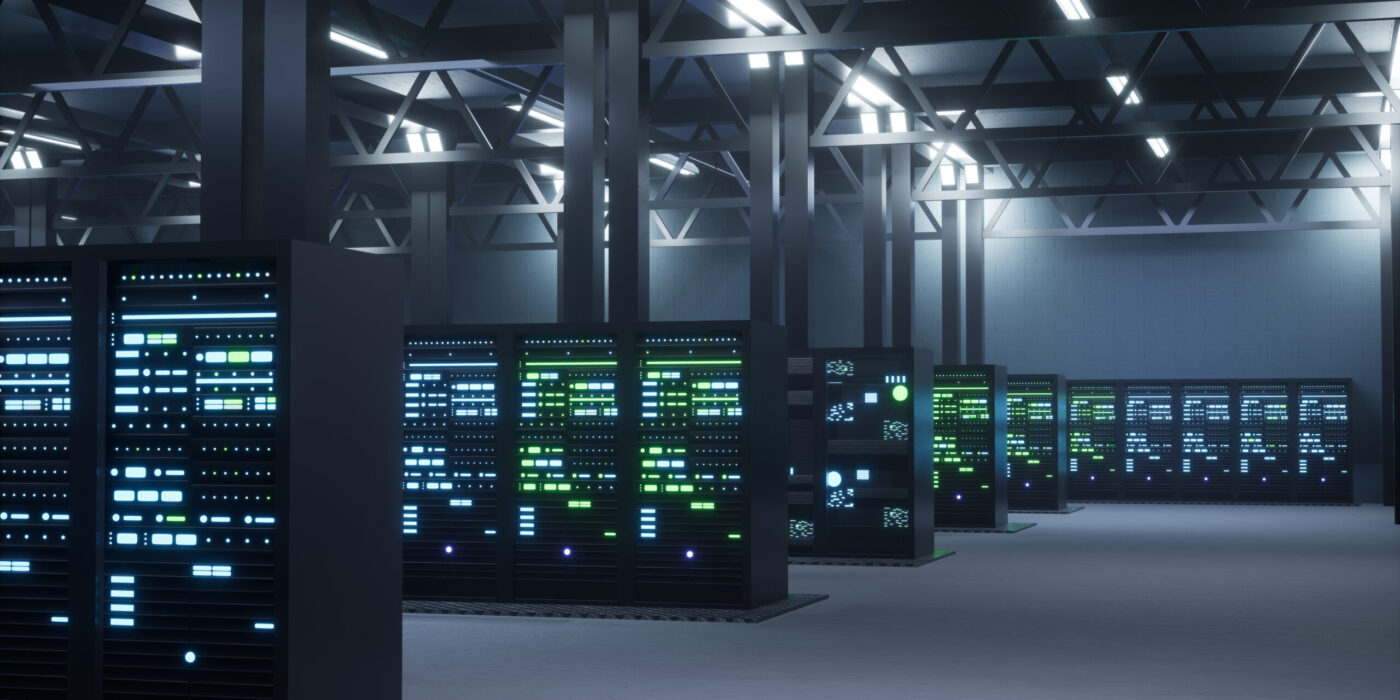
On Friday, July 24, 2026, Prime Minister Shehbaz Sharif and Chief of Defence Forces/Chief of Army Staff Field Marshal Syed Asim Munir jointly inaugurated Karakoram-01, a new AI-ready data centre and sovereign cloud platform branded Sky47, at Capital Smart City on the Islamabad–Rawalpindi border. State media and the government have called it the country’s largest and “first-ever” purpose-built AI data centre.
What was inaugurated
- Name and location: Karakoram-01 (also styled “Karakoram One” or “Karakorum-01”), the flagship site of the Sky47 platform, built at Silicon Village within Capital Smart City, on the Islamabad–Rawalpindi border.
- Capacity: An initial operational capacity of 8.5 megawatts, with design headroom to scale to more than 50MW and over 3,000 server racks.
- Certification: Built to Tier III/IV standards (Uptime Institute classification), with N+1 architecture, concurrent maintainability, precision liquid cooling, hot/cold aisle containment, and a stated uptime target of 99.982%. It is described as carrier-neutral, with ISO 27001-aligned physical and digital security (biometric access, mantraps, 24/7 surveillance).
- Function: Positioned as a sovereign cloud and AI/HPC (high-performance computing) platform intended to host government, banking, telecom, healthcare and enterprise workloads inside Pakistan rather than on foreign servers — explicitly framed around “data sovereignty.”
- Technology partner: Chinese telecom equipment giant ZTE was the key build partner.
- What’s next: A second, 5MW facility is under development at Port Qasim, Karachi, targeted for completion by September 2026. A third node is planned for Lahore, which would give the network three-city geographic redundancy.
Who actually built it
Despite the “AI cloud” branding, Sky47 did not emerge from Pakistan’s telecom or IT sector — it comes from the oil and gas industry. Sky47 Limited is a majority-owned subsidiary of Mari Energies Limited (formerly Mari Petroleum Company), operated through Mari Energies’ wholly owned subsidiary Mari Technologies Limited, with Habib Rafiq Engineering also named as a project partner. Mari Energies disclosed the project to the Pakistan Stock Exchange as material corporate information, first flagging plans for “Pakistan’s largest Cloud and AI Infrastructure Platform” in a PSX filing on January 16, 2026, before the July 24 launch.
Mari Energies itself is a heavyweight, military-linked PSX energy company:
- Founded in 1984, headquartered in Islamabad, formerly known as Mari Gas Company and then Mari Petroleum.
- Majority ownership sits with the Fauji Foundation (a military-run welfare trust, ~40%), the state-owned Oil & Gas Development Company (OGDCL) (~20%), and the Government of Pakistan (~19.99%).
- Chaired by Lt Gen Anwar Ali Hyder (Retd), with Faheem Haider as CEO.
- A KSE-100 and KSE-30 component with roughly $630 million in 2025 revenue and $1.5 billion in total assets.
That ownership structure explains the otherwise unusual pairing at the inauguration podium: an energy company controlled substantially by a military welfare foundation, launching a civilian AI/cloud platform, with the army chief co-inaugurating it and credited by the prime minister as the project’s supervising authority. Both Shehbaz and Field Marshal Munir spoke of the facility being delivered by “the best minds from across Pakistan in both the military and civilian sectors,” and the PM specifically thanked Munir’s “leadership,” “foresight” and “strategic planning” for making the project happen in what officials called record time.

The political theatre around it
IT and Telecom Minister Shaza Fatima Khawaja gave the more substantive policy pitch, describing the centre as infrastructure for producing what she called “the most important economic unit today: token intelligence” (a reference to AI inference/compute tokens). She cited McKinsey projections that global data-centre demand will triple by 2030, and Goldman Sachs estimates of a 160% rise in associated power requirements by the same year, framing Pakistan’s young population as an underused asset held back by a lack of compute infrastructure rather than talent. She also tied the launch to the government’s broader “Digital Nation Pakistan” push: this year’s 5G spectrum auction, doubled undersea fibre capacity, right-of-way reforms for broadband, AI skills programmes, and a network of AI startup incubators.
The “first” and “largest” claims don’t hold up cleanly
Government and state-aligned coverage describe Karakoram-01 as Pakistan’s “first-ever” and “largest” purpose-built AI data centre. Independent tech coverage has pushed back on both claims:
- Telenor/Data Vault (November 2025): Telenor Pakistan, in partnership with Data Vault, launched what it called Pakistan’s first locally hosted AI data centre and sovereign AI cloud — roughly eight months before Sky47.
- Khazana Cloud / NASTP (announced 2024, building since): Khazana Cloud, in partnership with the Air Force-run National Aerospace Science and Technology Park (NASTP), has separately been developing what it calls Pakistan’s first hyperscale data centre, built on Huawei hardware, across NASTP’s zones in Rawalpindi, Lahore, Karachi and Kamra. Khazana and Huawei had already launched an earlier “first” — a hyperscale financial cloud — back in 2023.
- Quantum Global Data Centre (QGDC): A venture of the Gul Ahmed Energy Group, announced in June 2026, planning what it calls Pakistan’s largest Tier III data centre, targeted for 2027 with an initial investment of $230 million (with a longer-term target of $600 million by 2030), in strategic partnership with Huawei Pakistan and including a linked science and technology park.
- NED University, Karachi (February 2025): A data centre inaugurated at NED University of Engineering and Technology was described by university officials as the country’s first “Tier-3 certified” data centre, aimed at public and private-sector IT services — a more academic/limited-scope claim, but a “first” nonetheless.
In short, Sky47’s 8.5MW puts it ahead of the others in disclosed operating capacity today, and its Tier III/IV certification and current scale are real — but “first” is really a branding contest among at least four to five overlapping projects that have each claimed a version of the title since 2023. Independent commentary (e.g., Connected Pakistan) has also noted that 8.5MW is “modest” by global standards — many hyperscale AI campuses run into the hundreds of megawatts — positioning Karakoram-01 as a credible starting point rather than a globally significant facility.
The critical case: is the timing right?
The most pointed independent critique running through Pakistani tech commentary is less about the engineering and more about macroeconomic sequencing:
- Power sector strain: Pakistan’s electricity sector carries substantial circular debt, and a facility drawing 8.5MW now — scaling toward 50MW — adds sustained demand at a time the grid is already under financial stress.
- Water scarcity: Precision liquid cooling systems consume water. Pakistan’s per-capita water availability has fallen sharply over the decades (commentary cites a drop from roughly 5,600 cubic metres in 1956 to under 800 today), placing the country well inside internationally recognised water-scarcity thresholds.
- FX reserves and import dependence: Nearly all of the underlying hardware — racks, chips, networking equipment — is imported, at a time Pakistan’s foreign exchange reserves remain thin and the country operates under an active IMF programme (reserves fell to roughly $3.5 billion during the 2023 crisis).
None of the coverage suggests the facility is unnecessary in principle — even critics call locally hosted, sovereign compute infrastructure a genuine and overdue need. The argument is about whether committing scarce power, water and foreign exchange to a large compute build now, amid an unresolved fiscal and energy crisis, is well-timed, and whether the “record time” framing is substituting spectacle for a harder conversation about what sustains the facility afterward — grid reliability, tariff structure, and actual enterprise/government adoption.
What to watch next
- Karachi (Port Qasim), September 2026 — the 5MW second node is the first real test of whether Sky47 can replicate delivery outside a flagship, high-visibility site.
- Lahore node — announced but with no firm capacity or date yet disclosed publicly.
- Adoption, not just capacity — the strategic case rests on Pakistani government agencies, banks and enterprises actually migrating workloads onto Sky47 (and rival platforms) rather than continuing to run on foreign hyperscalers based in Singapore or the UAE.
- Competitive field — QGDC’s $230–600 million Huawei-backed build, Khazana/NASTP’s hyperscale push, and Data Vault/Telenor’s earlier platform all compete for the same government and enterprise customers Sky47 is targeting, and each carries its own “first” or “largest” claim, so consolidation or a shakeout is plausible as capacity comes online through 2027.
What Sky47’s Data Centre Means for Islamabad’s Land and Water
Sitting inside Capital Smart City on the Islamabad–Rawalpindi margin, Karakoram-01 sits on land that was previously agricultural and semi-rural terrain in the Margalla foothills corridor a zone already under environmental scrutiny for large-scale real-estate development, deforestation, and disruption of natural drainage and groundwater recharge patterns in the area. A facility of this density brings localized pressures beyond its own footprint: continuous diesel backup generators (standard for Tier III/IV uptime guarantees) mean periodic emissions and noise at ground level; large-scale HVAC and liquid cooling systems can strain local water tables if sourced from groundwater rather than treated or recycled supply, which matters given Capital Smart City’s location near watershed areas feeding into the wider Islamabad ecosystem; and the hardened, high-security perimeter (biometric access, surveillance, restricted zones) effectively removes that land from any ecological or agricultural use going forward, a permanent rather than temporary change. There’s also a secondary effect worth naming: as Sky47 scales toward 50MW and rival projects (QGDC, Khazana/NASTP, Data Vault) build out their own campuses elsewhere, Pakistan could see a cluster of high-power, water- and land-intensive facilities emerging with no unified environmental review framework governing data centre siting, cooling-water sourcing, or e-waste disposal (server hardware typically has a 3–5 year refresh cycle) meaning the sector’s cumulative ecological impact is likely to arrive faster than the regulatory apparatus meant to track it.