
A textile conglomerate, a sanctioned Chinese tech giant, and a $230 million bet on digital sovereignty. The story is bigger — and riskier — than the press release.
On June 5, Gul Ahmed Energy Group announced it would build Pakistan’s largest data centre through its venture Quantum Global Data Centre (QGDC), with an initial investment of $230 million and a target to go live in 2027. Total investment could scale to $600 million over three to four years. The tech partner: Huawei Pakistan.
The announcement landed at the Q Summit in Karachi alongside plans for an adjacent science and technology park. It was framed as a milestone in Pakistan’s digital transformation — domestic compute capacity, local infrastructure, national pride.
All of that may be true. But the full story is more complicated, and Pakistani startups, policymakers, and builders deserve to sit with it.
The Bleeding Is Real
Start with the number QGDC Chairman Danish Iqbal put on the table: Pakistan is spending between $700 and $800 million annually on AI-related computing — and that’s at the earliest, most minimal stage of AI adoption. As AI use deepens across finance, healthcare, logistics, and government, that figure will compound fast.
Every rupee of that is leaving the country. Every workload running on AWS, Google Cloud, or Azure is being processed in data centres in Ireland, Singapore, or Virginia — billed in dollars, governed by foreign law, subject to foreign outages.
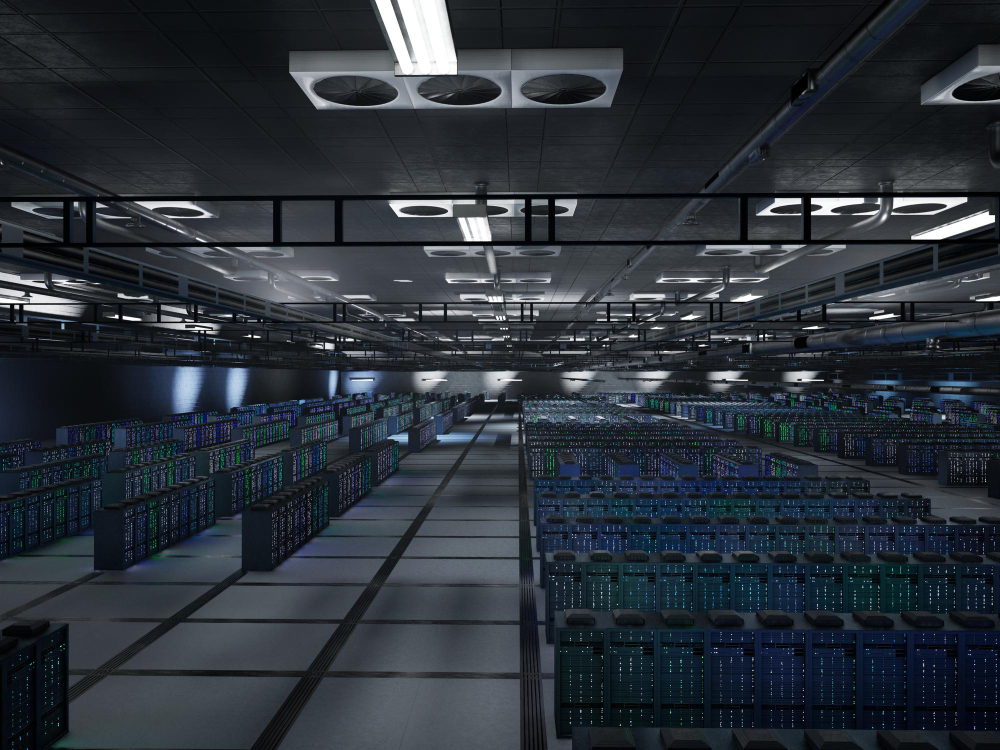
Pakistan’s entire domestic data centre market currently sits at an installed IT load of 23.53 MW. The country is forecast to need 53.30 MW by 2030 — a near-doubling — as cloud adoption accelerates and AI workloads scale up. The gap between where Pakistan is and where demand is heading is a genuine infrastructure emergency.
“We are at that stage that if we don’t take this chance right now, we will miss this boat.” — Danish Iqbal, Chairman, QGDC
An Unlikely Builder — With a Pattern Worth Noticing
The entity building this facility is not a tech company. Gul Ahmed is one of Pakistan’s oldest industrial conglomerates — trading since the early 1900s, manufacturing textiles since 1953, listed on the Karachi Stock Exchange since 1970. The group behind Ideas by Gul Ahmed — the fabric brand in your living room — is now building the infrastructure that might run Pakistan’s AI economy.
That sounds strange. But it’s actually a pattern. When Pakistan needed private power generation in the 1990s, it was industrial groups that stepped in. Gul Ahmed Energy built a 136MW power plant in Korangi, then wind farms, then solar, now compute. The group has spent decades following Pakistan’s infrastructure gaps and filling them with private capital.
This raises an uncomfortable question: why is it always the old industrial money that builds Pakistan’s critical infrastructure? Where is the tech sector when it comes to mobilising capital at this scale? The answer is structural — data centres require patient, long-horizon capital that early-stage venture funding cannot provide. But it’s worth naming.
The Partner Pakistan Chose
Huawei is not a neutral infrastructure vendor. It is a Chinese state-linked technology company currently facing a federal trial in the United States on 13 counts, including conspiracy to violate sanctions and intellectual property theft. The EU has mandated its removal from critical 5G infrastructure by 2026–2029, designating it a “high-risk vendor.” The US, Australia, Japan, and the UK have all imposed restrictions or outright bans.
Huawei’s response has been to go where the bans don’t apply. Across Africa, it has secured data centre projects in more than 25 countries, with over $300 million earmarked in the region through 2026. The pitch is always the same: sovereignty. Build locally, keep your data home, stop depending on Western cloud providers.
But the sovereignty argument has a hole in it. Under China’s National Intelligence Law (2017), Chinese companies — including Huawei — are legally required to cooperate with Chinese state intelligence operations, including for data stored or processed outside China. This is not a hypothetical. It is written into law. The infrastructure QGDC builds with Huawei’s technology will, by legal architecture, be accessible to Chinese state actors in ways no private contract can override.
Pakistan would be solving its dependency on American cloud infrastructure by building its critical compute layer with a company legally obligated to the Chinese state. That is not sovereignty. That is a different landlord.
The CPEC Dimension
This is not happening in isolation. Pakistan and China are already deep into CPEC Phase 2, which explicitly prioritises the “digital corridor” — 5G, AI, data centres, and content hosting with Chinese platforms. In September 2025, the two countries signed 148 MoUs and 21 joint agreements worth $8.5 billion, with technology infrastructure prominent across the agenda.
The QGDC–Huawei deal is one node in a much larger network being built — deliberately, systematically — by Chinese tech capital in Pakistan. Pakistan is making a geopolitical infrastructure bet, and it is betting on China. That choice will shape the country’s digital architecture for decades. The question isn’t whether Huawei builds good data centres. It does. The question is what comes with the hardware.
What Startups Should Be Asking
For Pakistan’s startup and tech ecosystem, the QGDC announcement is genuinely significant. If this facility comes online in 2027 as promised, it could change the unit economics of building AI products in Pakistan — domestic compute at competitive rates, lower latency, rupee-denominated billing. These are real advantages for founders currently navigating dollar-priced cloud costs on rupee revenues.
But that benefit comes wrapped in infrastructure built to Chinese technical standards, managed by a company under geopolitical pressure from half the world, in a regulatory environment where Pakistan has no meaningful data protection law and no clear framework governing foreign vendor access.
The $230 million investment will get built. The tech park will get announced. The ribbon will get cut. What Pakistan still needs — and what nobody announced at the Q Summit — is a data governance framework that governs who can access what, under what conditions, with what consequences.
Without that, the data centre is just real estate. Pakistan doesn’t need to stop building. It needs to build with its eyes open.