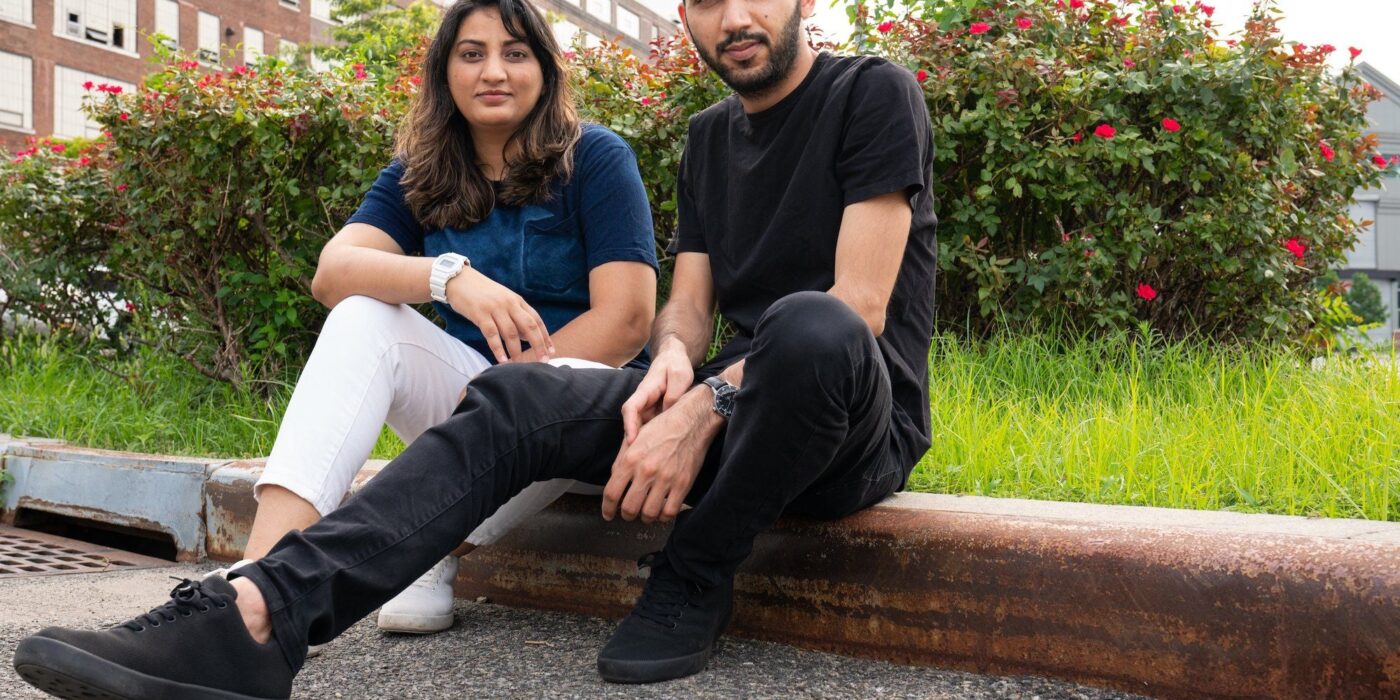
In 2012, a Pakistani founder got rejected by YC. Three years later, he became the first. Here’s the full story — including the part where they almost gave up.
In 2012, a young founder from Okara submitted an application to Y Combinator.
He got rejected.
Three years later, Waqas Ali and Sidra Qasim, a husband and wife team running a leather shoe company out of a small Pakistani town became the first Pakistani company based in Pakistan to ever get into Y Combinator.
Four years after that, the company they built inside YC raised $8.1 million from Kleiner Perkins, Reddit’s co-founder, and LinkedIn’s CEO.
This is that story, in full. Not the highlight reel version. The actual one — with the part where they almost gave up.
It Started With a Council Meeting
Go back to 2010. Okara is an agricultural town southwest of Lahore. Waqas Ali was a college student with a passion for technology and social media — running a small social media company before he even owned his own computer.
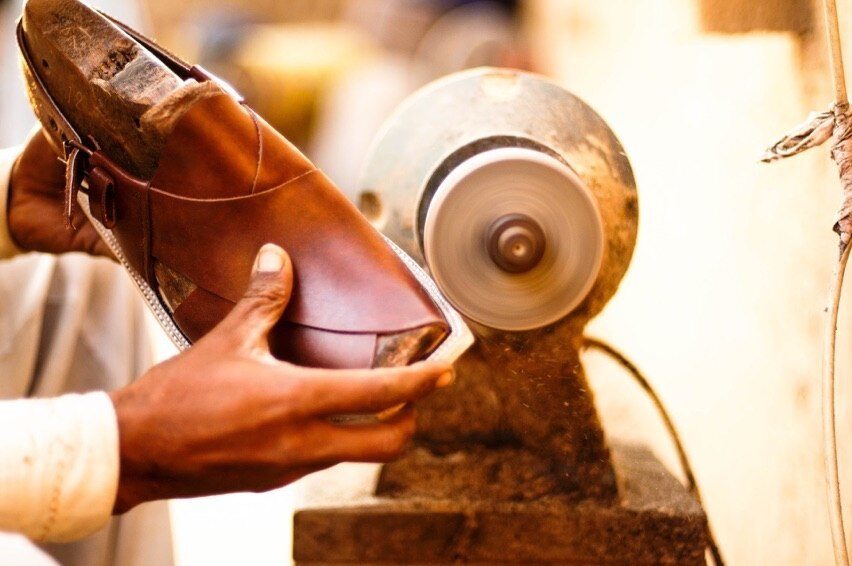
At a local panchayat — a village council meeting — Waqas met a shoemaker named Muhammad Hussain.
That meeting became the seed of everything that followed. Waqas and Sidra — who had met through the internet, in a story that’s its own kind of remarkable for rural Pakistan in the 2010s — started looking for a business idea. They approached a group of skilled leather craftsmen about a potential partnership. The craftsmen weren’t interested in working with them directly.
So Waqas and Sidra pivoted on the spot: what if they built an online shoe business, and had the craftsmen manufacture the product?
The craftsmen said yes. Around the same time, Waqas and Sidra heard about a Google program for startups in Pakistan and applied with the shoe company concept. They got the money to get started — and went straight back to Lahore.
The company was originally called Hometown. It would later become Markhor.
The First Year: 50 Shoes a Month
For a year, Markhor sold leather shoes online. Slowly. About 50 pairs a month.
This is the part of the story that gets skipped in most retellings — the year where nothing dramatic happens. No funding announcement. No accelerator acceptance. Just two people in Lahore, selling handmade shoes, one order at a time, while figuring out how to run a business neither of them had any formal training to run.
Then they decided to try something bigger. They launched a Kickstarter campaign with a $15,000 goal.
22 Hours
The campaign went live on a Monday night.
By the time Waqas and Sidra woke up Tuesday morning, they had already hit their $15,000 goal. Markhor ran the most successful Kickstarter campaign ever out of Pakistan, raising more than $107,000. In the summer of 2015, they delivered 700 orders to customers across 35 different countries.
The campaign exceeded its funding target by $92,000, with pledges coming from 508 people in 32 different countries.
Here’s what made this possible: Waqas had previously visited the United States and met other e-commerce entrepreneurs from companies like Warby Parker and Everlane, and met the company’s first two angel investors, who each invested $15,000 to help get the company off the ground. The connections made on that trip helped drive attention to the Kickstarter when it launched.
Because Waqas and Sidra had been documenting their journey on social media and blogs throughout, media outlets picked up their story and orders began flowing in once the campaign went viral.
A leather shoe company from a small town in Punjab had just run the most successful crowdfunding campaign in Pakistani history.
Application Number Two
Here’s the detail that almost never makes it into the highlight reel: this was not Markhor’s first YC application.
Waqas revealed this was his second application to YC — an earlier attempt in 2012 had been rejected. Three years had passed between the rejection and the moment Markhor reapplied with the company now incubated at Lahore-based Plan9, with advice from Zappos, and incorporated in the US.
In 2015, Markhor was accepted into Y Combinator — becoming the first Pakistani startup to be granted admission into the accelerator. Waqas told Tech in Asia they weren’t confident about the application, since YC rarely accepts fashion startups — but the impressive growth and traction they’d built in a relatively short time was a major reason they were accepted this time.
Read that again: the program rarely accepts fashion startups. A leather shoe company from rural Pakistan, against the odds of both geography and category, got in — three years after being told no.
The traction is what changed the answer. Not the idea. The idea was the same idea. What changed was 508 backers in 32 countries, $107,000 raised, and 700 orders shipped across 35 countries — proof, in numbers, that people wanted what they were building.
San Francisco: The Part Nobody Talks About
For three months, Waqas and Sidra mingled with Harvard and Stanford graduates launching buzzy tech startups, while they wrestled with rawhide and supply chain headaches of their own very different kind of company. At night, they immersed themselves in English — watching American movies with subtitles and listening to startup podcasts. Their housemate at the time, Antoine McGrath, later said the only way he knew they were awake was if the audio was still on. It was constant.
This is the texture of what “going through YC” actually looks like for a founder coming from a context completely different from Silicon Valley’s default. It wasn’t just pitch practice and investor meetings. It was two people from Okara, learning to operate inside a culture and a language environment that had nothing in common with where they’d built their company — while also trying to run that company.
Sidra later described one of the things that stood out most about the YC program: the mentor structure. If you set up time with a mentor, you get 20 minutes, no more — and when you meet with a mentor, they ask three questions: “What did you do last week?” “What are you doing next week?” and “How can I help?” You have to be ready.
Twenty minutes. Three questions. No room for vagueness. This is the operating culture YC runs on — and it’s a useful thing for any founder to know before walking in: nobody is there to be impressed by your story. They’re there to help you solve whatever’s actually in front of you that week.
Three Months of Runway Left
This is the part of the story that almost didn’t get told at all.
During their time at YC, struggling with just three months of runway left, Waqas and Sidra faced a crucial moment. “I was imagining I’m going to go back to my hometown and my life is over,” Sidra later said.
This is worth sitting with. They had done everything right by every external measure — the viral Kickstarter, the YC acceptance, the first Pakistani company to make it into the most selective accelerator in the world. And they were three months from running out of money, sitting in San Francisco, with Sidra imagining the flight home and what it would mean.
Instead of giving up, they went back to basics — asking themselves fundamental questions about their purpose and what they actually cared about. Their research led them to a surprising insight: people were buying running shoes for everyday wear, but the shoes weren’t built for walking and standing all day.
That insight — sitting right there in a market they already understood, shoes — became the seed of an entirely new company.
Ali typed a question into a Google doc they titled “Project K2” — named after the mountain on the Pakistan-China border that’s the hardest in the world to climb. Then they kept writing more questions.
The name they picked for their next mountain to climb tells you everything about how they were thinking about what came next.
Atoms
The company that came out of “Project K2” was Atoms — a direct-to-consumer shoe brand that sells in quarter sizes instead of halves, and lets customers buy different sizes for each foot.
Atoms built a waitlist of more than 39,000 people before launching to the public in June 2019. Vogue called the shoes “the most thoughtfully designed sneakers ever,” and Esquire described them as “secret-weapon sneakers.”
The Series A round — $8.1 million — was led by Initialized Capital, the investment firm started by Reddit co-founder Alexis Ohanian and Garry Tan. Additional investors included Kleiner Perkins, Dollar Shave Club CEO Michael Dubin, Acumen founder and CEO Jacqueline Novogratz, LinkedIn CEO Jeff Weiner, TED curator Chris Anderson, and rapper Chamillionaire.
Here’s the detail that closes the loop on the entire story: Garry Tan and Alexis Ohanian had first encountered Atoms and its co-founders as mentors — when Sidra and Waqas were going through Y Combinator with Markhor.
The mentor relationship built during those three intense months in San Francisco — the 20-minute sessions, the three questions, the constant pressure — became the relationship that led an investor to back their next company, years later. Garry Tan said of the shoes: “The pinnacle of great design is usually found in the most every day of things. Atoms is no exception. The founders have been so thoughtful about every aspect of this shoe, and it becomes obvious the second you slip them on. We’re proud to be investors with this world-class team.”
Atoms started in Ali and Qasim’s basement before relocating to a new headquarters in the Brooklyn Navy Yard, with team members who’d previously worked at Amazon, Twitter, Quip, and Stadium Goods. This brought Atoms’ total investment to $8.6 million, after an earlier $560,000 seed round.
What This Story Actually Teaches
Strip away the headline numbers and here’s what’s left — the parts that are useful for any Pakistani founder reading this today.
Rejection isn’t the end of the story. It’s chapter one. The first YC application, in 2012, was rejected. Nobody talks about that version of the story because it doesn’t have a happy ending yet. But it’s the version that actually happened first. Three years of building — the Kickstarter, the traction, the incorporation — is what turned a no into a yes. Not a better pitch. Better evidence.
Traction is the thing that changes the answer. YC told them, in effect: we don’t usually take fashion startups, but your traction made this an easy yes. The idea hadn’t changed. The proof had.
The hardest moment comes after you’ve already “made it.” Getting into YC felt, from the outside, like the finish line. From the inside, it was the start of the hardest stretch — three months of runway, a moment where going home felt like the only option. The lesson here isn’t “it gets easier.” It’s that the moment that feels like the end is often the moment right before the actual turn.
The relationships you build under pressure outlast the company you built them for. Markhor didn’t survive in the form it started in. But the mentors from that period — Garry Tan, Alexis Ohanian — became the investors in what came next. The network YC gives you isn’t a one-time transaction. It’s a relationship that compounds.
Where you’re from is not the obstacle. It’s the foundation. A council meeting in Okara. A shoemaker named Muhammad Hussain. Craftsmen who said yes to an idea two young founders made up on the spot. None of that read as “Silicon Valley” by any conventional measure — and all of it became the foundation of a company that Vogue, Kleiner Perkins, and LinkedIn’s CEO would eventually take seriously.
The Door They Walked Through Is Still Open
Markhor was the first Pakistani company based in Pakistan to get into YC. That was 2015.
In 2026, the door is exactly where they left it. The application form asks the same kinds of questions. The traction bar is the same kind of bar — not perfection, but proof of momentum. The mentors are still doing 20-minute sessions with the same three questions.
What’s different is that more Pakistani founders now have evidence that the door opens. Markhor opened it. Cowlar walked through it two years later. Four companies walked through it together in 2022.
The next founder through that door could be reading this article right now.
The Fall 2026 deadline is July 27. Applications are open at ycombinator.com/apply.
Also read: https://startup.pk/can-a-pakistani-founder-actually-go-to-yc-the-visa-question-answered-honestly/