A deep dive into the chain of events that made getting dressed in Pakistan an act of financial bravery.
You’re standing in a brand store. You pull a three-piece unstitched suit off the rack. It’s pretty. It’s your color. You flip the tag.
Rs. 8,500. For lawn. Unstitched. That you still have to take to a tailor.
You put it back. You pick up another. Rs. 7,200. You do the math, remember your tailor charges Rs. 3,000 minimum, and you leave the store with nothing feeling like something shifted in the world while you weren’t looking.
You’re not imagining it. Something did shift. Several somethings, actually and they all happened at the same time.
First, The Numbers
Before anything else, let’s establish the scale of what happened. In 2019, one US dollar cost around Rs. 150. By September 2023, that same dollar cost Rs. 307, more than double in four years. By 2025 it sits around Rs. 280, which sounds like a recovery until you remember that’s still nearly twice what it was six years ago.¹
This matters for your wardrobe because almost everything in the fashion supply chain touches a dollar at some point imported fabric blends, synthetic threads, chemical dyes, embellishments, machinery parts, packaging. When the dollar doubles, the cost of making your kameez moves with it whether brands like it or not.
And to make things worse, Pakistan’s general inflation peaked at 37.97% in May 2023 the highest recorded since inflation data was first collected in 1965.² Which means even setting fashion aside, everything cost more. Groceries, petrol, utilities. The money women had available to spend on clothes shrank at the exact same time clothes got more expensive. A perfect, painful storm.
But clothing didn’t just rise with general inflation. It rose above it. Because clothes have their own very specific set of problems on top of everything else.
The Flood That Drowned Your Wardrobe Budget
Pakistan is a cotton country. It always has been. Cotton is in our export identity, our industrial backbone, our economic story. In a good year, Pakistan grows enough cotton to clothe a significant chunk of the world.
2022 was not a good year.
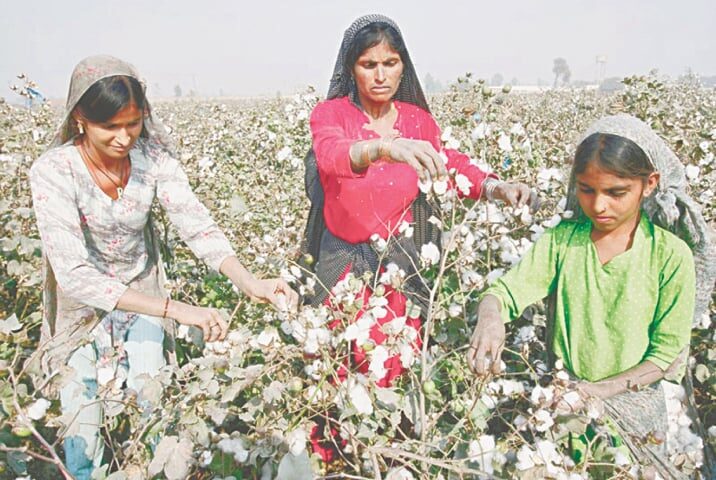
The monsoon floods of 2022 destroyed an estimated 45% of Pakistan’s cotton crop. Pakistan is the world’s fifth-largest cotton producer and cotton makes up more than 60% of the country’s exports.³ In Sindh alone, production losses were estimated at 88% the province that normally accounts for 23% of the national harvest was virtually wiped out.⁴
Not a bad season. Not a dip. Eighty-eight percent, underwater.
When Pakistan can’t grow its own cotton, it has to buy it from somewhere else international markets, in dollars, at a time when the rupee had just crashed. The raw material that used to be grown two provinces away suddenly had to be imported at full international price in a collapsing currency. That flood didn’t just destroy fields. It wiped out the single biggest cost advantage Pakistani clothing brands had: cheap, local fabric. That advantage is gone, and you are paying for its absence every time you shop.
The Lights Went Off in the Factory
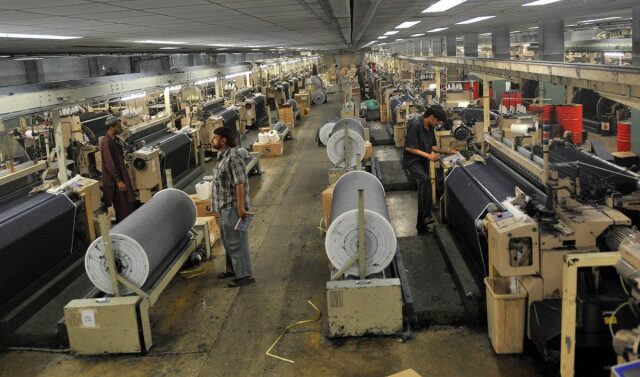
Nobody tells you how much it costs to actually make a piece of clothing. Before the print, before the embroidery, before the packaging and the brand tag someone has to run the machines. Spinning machines. Looms. Printing presses. Cutting tables. And those machines run on electricity, which in Pakistan became a crisis of its own.
Energy costs make up 12 to 18% of total input costs for textile manufacturers. When power tariffs jumped from 9 cents per unit to 14 cents per unit, profitability was slashed and costs had nowhere to go but down the chain onto you.⁵ Spinning and textile units had no option but to halt operations entirely. The ones that stayed open had to charge more to survive.⁶
Fewer active factories means less fabric being produced, which means tighter supply, which means prices go up. It is basic economics but nobody explains it at the checkout counter. When your bill is high, it’s partly because the lights in the factory that made your dupatta cost twice as much to keep on as they did three years ago.
The Brand Didn’t Have To Keep Prices Low And It Knew It
Not everything that happened to Pakistani fashion was external disaster. Some of it was a very deliberate choice by very smart brands. Over the last decade, Pakistan’s big clothing brands made a strategic move: they stopped trying to be affordable and started trying to be aspirational. They didn’t announce this. They just quietly invented a new category called Luxury Pret.
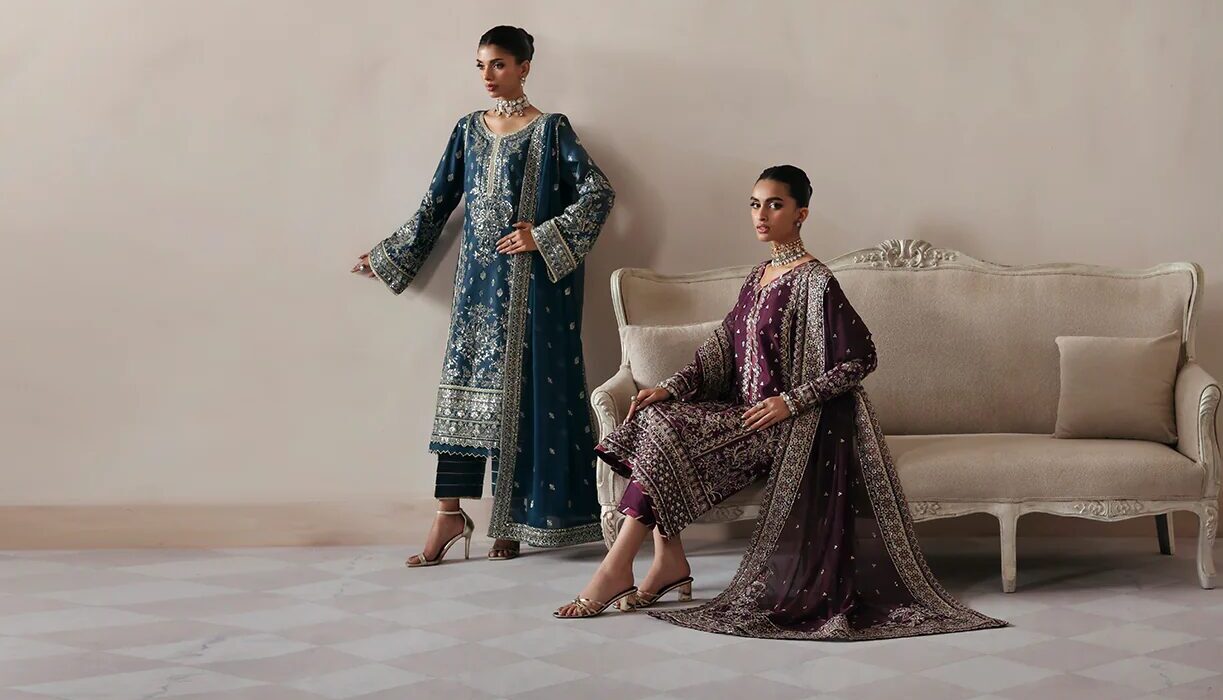
Brands like Sana Safinaz, HSY, and Elan were pioneers in this space, introducing collections that combined the convenience of ready-to-wear with the exclusivity of haute couture.⁷ The pricing reflects this positioning. Sana Safinaz’s range goes up to Rs. 110,000 for luxury pret. Ethnic by Outfitters goes up to Rs. 90,000 for premium collections.⁸ Rs. 110,000 for one outfit, from a Pakistani brand. Let that sit.
But here’s the subtler move: when luxury pret sets the ceiling, everything below it shifts upward too. When a Sana Safinaz suit is Rs. 30,000, a Khaadi unstitched at Rs. 6,000 suddenly feels “affordable” even though Rs. 6,000 for lawn felt expensive five years ago. The ceiling went up, and it dragged the floor with it.
You’re not just paying for cloth and thread. You’re paying for a brand’s decision to position itself as a lifestyle statement. The product didn’t change that dramatically. The story around it did. And you’re being charged for the story
Instagram Gave You a Problem Your Nani’s and Dadi’s Never Had
Open Instagram right now. Scroll through your feed during any Eid week, any wedding season, any new lawn drop. Notice anything?
Everyone is wearing the same three suits. Same print. Same color story. Same dupatta drape. Because they all bought from the same four brands, who released to the same 10 million customers, all of whom follow the same 50 influencers who were gifted the same pieces three weeks before launch to build the exact same desire in exactly the same audience.
Social media platforms like Instagram and TikTok have made trends spread across cities within hours. Women in Karachi, Lahore, Islamabad, Multan, and smaller towns now follow the same drops in real time.⁹ And here’s what cuts closest: when you see something being worn by everyone, you want it too. Then you share pictures. Then you can’t bring yourself to repeat those clothes because how many times can you post a picture in the same outfit?¹⁰
This creates permanent churn demand. Brands know it. That’s why they drop four collections a year now instead of two. Not because you need four wardrobes. Because the algorithm makes you feel like you might.
What you’re experiencing is instant gratification you see something, feel the urge to buy it immediately, and it’s just a tap away. It often feels like it’s perfectly suited to your style, almost as if it was curated just for you. But in reality, that preference is being shaped for you influenced by what you’re shown repeatedly.
The result? You end up buying more often, sometimes at higher prices, yet feeling less satisfied each time.
This isn’t random. It’s how the system is designed.

The Same Outfit Everywhere And The Wardrobe That Becomes Trash
Most brands now release three to four collections every year each marketed as a must-have. Eid sales, Ramzan sales, Black Friday, Independence Day. Clothing has been turned into a fast-moving consumer product, and social media pressure pushes consumers to buy what’s in, not what’s needed. The result: we are buying more clothes than ever before and throwing them away just as fast.¹¹
The outfit you bought for a dawat in October gets worn once maybe twice if you’re unsentimental about photo repeats and then migrates to the back of your cupboard. Not because it’s worn out. Because everyone already saw it on your Instagram. It isn’t worn out. It’s socially expired.
And that social expiry has a real, ugly, physical cost. Pakistan produces around 270,000 tons of post-consumer textile waste annually, plus an estimated 887 kilotons of pre-consumer waste from fabric cutting and dead stock. Nearly 87% of all textiles globally end up in landfills or are incinerated less than 1% is recycled back into new clothing.¹² Karachi, a city of over 20 million, has only three controlled landfills and no dedicated textile waste treatment facilities.¹³ Synthetic fabrics like polyester release microfibers when washed too small for wastewater filters — entering oceans, marine life, and eventually the food chain.¹⁴
You buy a polyester-blend suit. Wear it twice. It goes to the cupboard. Then to a landfill. Then into the water. Then back into you.
The Tailor Economy Is Dying And So Is Your Leverage
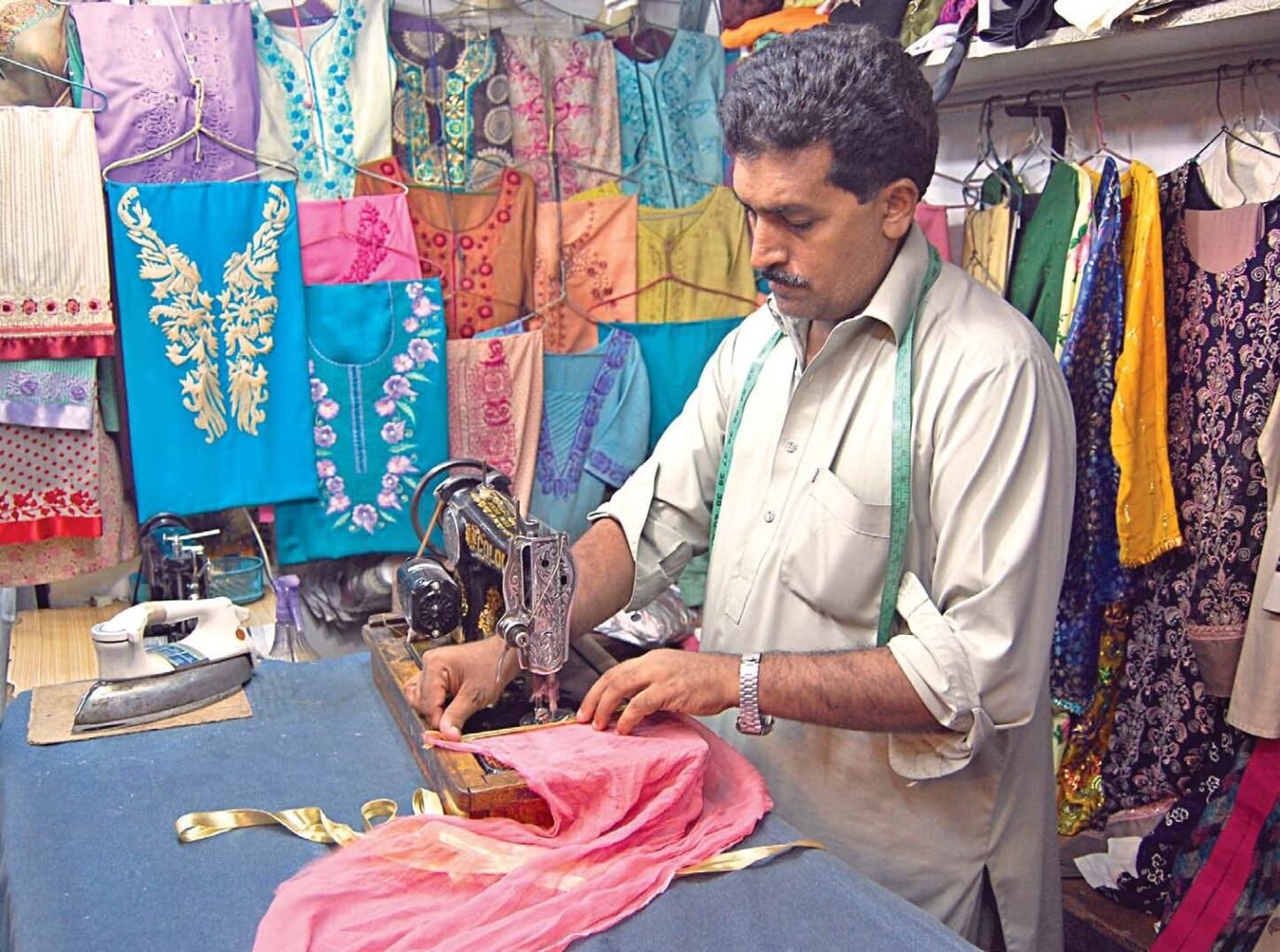
For generations, the Pakistani woman’s wardrobe was a negotiation. You bought unstitched fabric from Liberty or Tariq Road, had a relationship with a tailor who knew your measurements and charged you a rate you’d both agreed on years ago. You controlled the fit, the style, the cost. You had power.
Pret erases that power entirely. When everything is ready-to-wear, the brand sets the price and the sizing. You take it or leave it. The shift from “I’ll get this stitched” to “I’ll buy off the rack” feels like convenience and it is but it removed the one buffer that gave middle-class women budget flexibility.¹⁵
You used to buy Rs. 1,500 fabric plus Rs. 1,000 tailoring for a total of Rs. 2,500 and get something that fit you perfectly. That same transaction in a brand store costs Rs. 6,000 to Rs. 12,000 for something that may or may not fit. Pret didn’t just become more expensive. It removed your ability to optimize.
How Its All Connected
Floods knocked out local cotton. No local cotton meant importing in dollars. The rupee crashed so those imports cost double. Factories ran on electricity that had become unaffordable. Fewer factories meant less supply. Brands used the scarcity to go premium. Instagram made you want the premium. You bought it, wore it once, and it became waste. Another collection dropped. Repeat.
You are standing at the end of that chain, holding a price tag, and being asked to absorb all of it.
The Way Out And It Starts With Your Dadi
Here is the thing nobody in this conversation wants to say: your grandmother was doing it right.
She bought fabric by the meter. She had a tailor who knew her name, her measurements, her taste. She wore the same lawn suit to three dawats in a row and nobody thought less of her for it in fact, her friends complimented her on it each time. She mixed and matched. She altered hemlines. She passed good fabric down. She got decades out of a single piece of karandi. She was not behind the times. She was, by every modern metric we now use for sustainability, ahead of them.
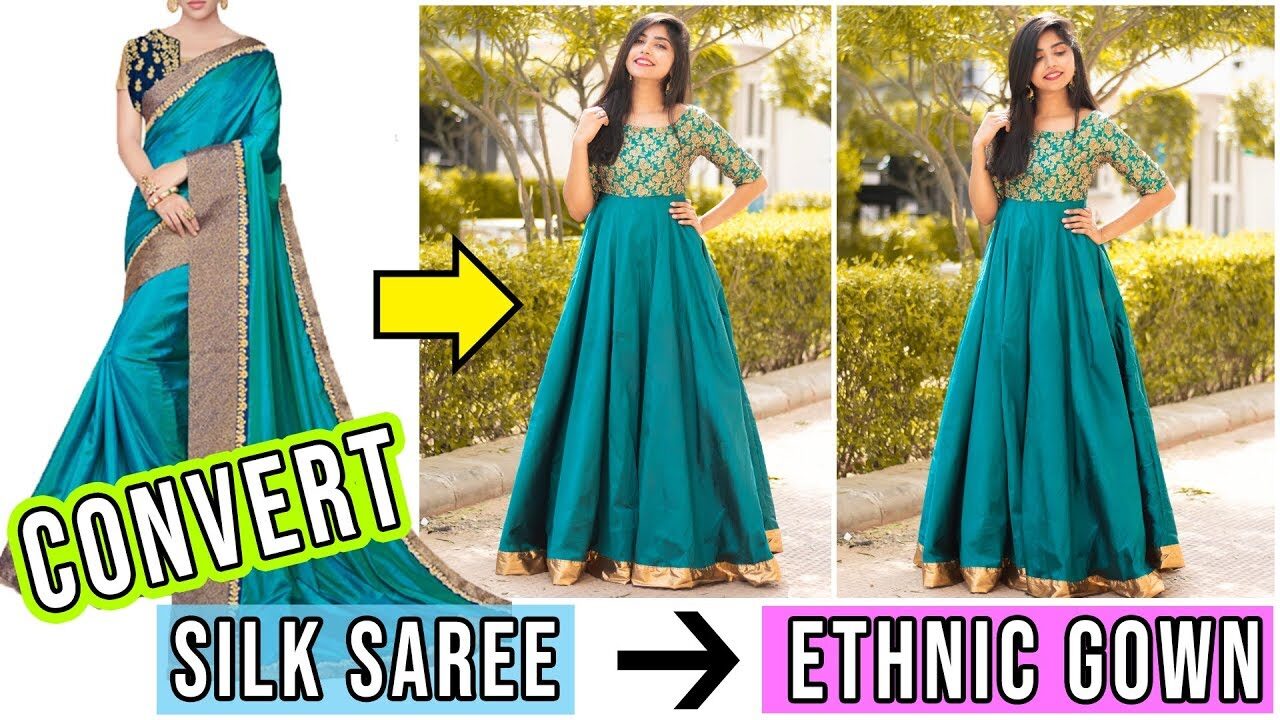
The rewear was not laziness or poverty. It was wisdom. It was the understanding that a good fabric, well chosen, does not expire. It does not have a season. It does not care what the algorithm says. The embarrassment around repeating an outfit is not a cultural value that has always existed in Pakistan it is a relatively new import, arrived with Instagram and influencer culture, designed to make you feel inadequate enough to buy something new. Your nani felt no such embarrassment. Neither should you.
This is not about going back to some imagined simpler time. It is about recognizing that the culture of rewearing, repairing, and making things last was always ours and that it was quietly replaced by a consumption model that profits from your insecurity.
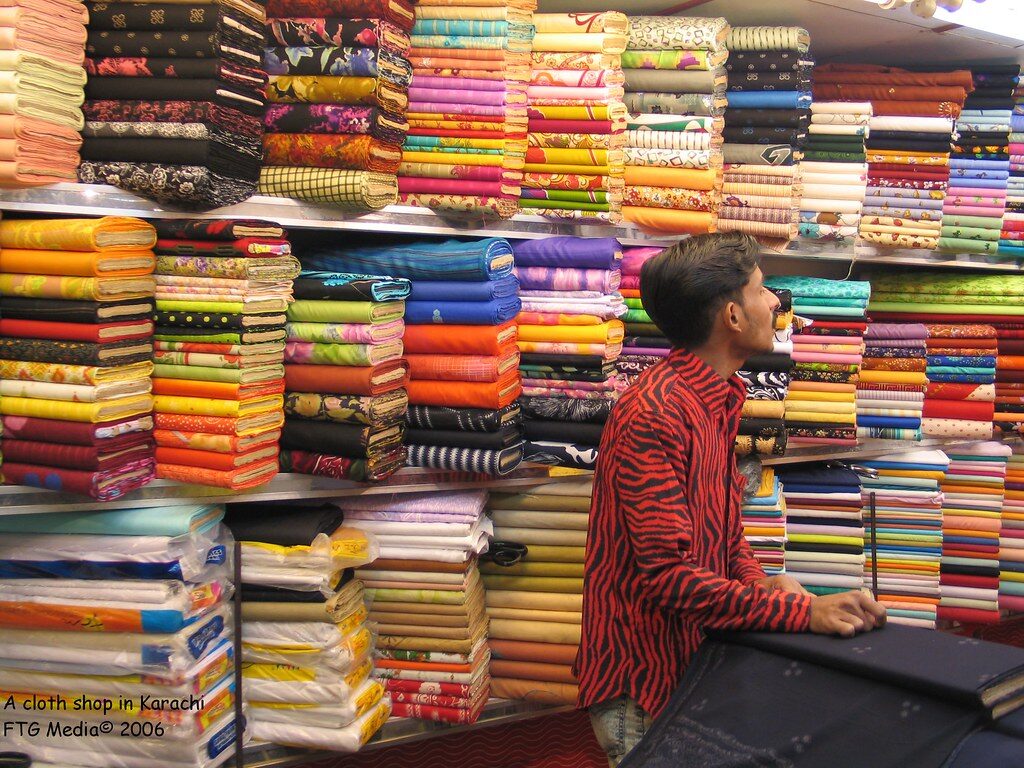
Going back to the fabric market is not a compromise. It is a reclamation. Liberty, Tariq Road, Anarkali, Empress Market they are still there, still selling high-quality cotton, silk blends, organza, karandi, lawn by the meter at a fraction of what a branded three-piece costs. Your tailor the one who knows your kameez always needs to be a little longer at the back, the one who adds that half inch you always ask for that relationship is still available to you. An outfit nobody else is wearing, in your exact measurements, with your design choices, at your negotiated price. That is not a downgrade from pret. That is better than pret in every measurable way except the brand tag.
And the brand tag is the whole point. The brand tag is the only thing you’re actually paying extra for.
Beyond the fabric market, the preloved revolution is already quietly happening in Pakistan’s cities. Instagram accounts, neighborhood swaps, student thrift sales. The stigma around wearing someone else’s clothes is fading among younger women in Karachi, Lahore, and Islamabad slowly, but genuinely. When you sell your preloved clothes or buy someone else’s, you keep both money and fabric circulating locally instead of letting them pile up in a landfill.¹⁶
Meanwhile, Pakistan imported nearly $511 million worth of used clothing from abroad between 2024 and 2025 an 18% increase much of it undercutting locally made garments.¹⁷ Pakistan’s textile sector employs 40% of the country’s workforce and accounts for 59% of exports.¹⁸ Every time you buy from a local fabric market instead of an imported discard pile, money stays inside the ecosystem that employs nearly half of Pakistan’s working population. Buying local fabric is not just thrifty. It is economic solidarity in the most direct form available to an ordinary consumer.
Wear your clothes again. Not because some European environmental agency told you to. Because your nani did, and she always looked incredible, and she never once checked Instagram to see if anyone noticed.
The most radical thing you can do in a wardrobe economy designed to keep you spending is to simply stop, look at the tag, put it back and know exactly why it costs this much.
Now you do.
Sources
- State Bank of Pakistan — PKR/USD historical rates, 2019–2025
- Trading Economics — Pakistan Inflation Rate, May 2023
- Relief Web / FAO — 2022 Pakistan Flood Impact: Cotton Crop Assessment
- UNOSAT / UN — Impact of 2022 Floods on Sindh Agriculture
- Pakistan Textile Journal — Energy Costs in Textile Manufacturing, 2023
- Dawn Business — “Textile Units Halt Operations Amid Rising Costs,” 2023
- Profit by Pakistan Today — “The Rise of Luxury Pret in Pakistan”
- Profit by Pakistan Today — Brand Price Range Comparisons, 2024
- The News International — “Social Media and Fashion Consciousness in Pakistan,” 2024
- Profit by Pakistan Today — “Why Pakistani Women Keep Buying Lawn”
- Sustainable Pakistan Report — Fast Fashion Consumption Patterns, 2023
- Heinrich Böll Stiftung Pakistan — Textile Waste Report, 2023–24
- Dawn — “Karachi’s Landfill Crisis and Textile Waste,” 2024
- Interloop Sustainability Report — Microfiber Pollution, 2023
- Dawn — “From Fabric Markets to Pret: How Pakistani Fashion Changed,” 2023
- The News / Geo — “Pakistan’s Secondhand Clothing Market Boom,” 2024
- Dawn — “Pakistan’s Used Clothing Imports Hit $511m,” 2024–25
- APTMA — Textile Sector Employment Data, 2024