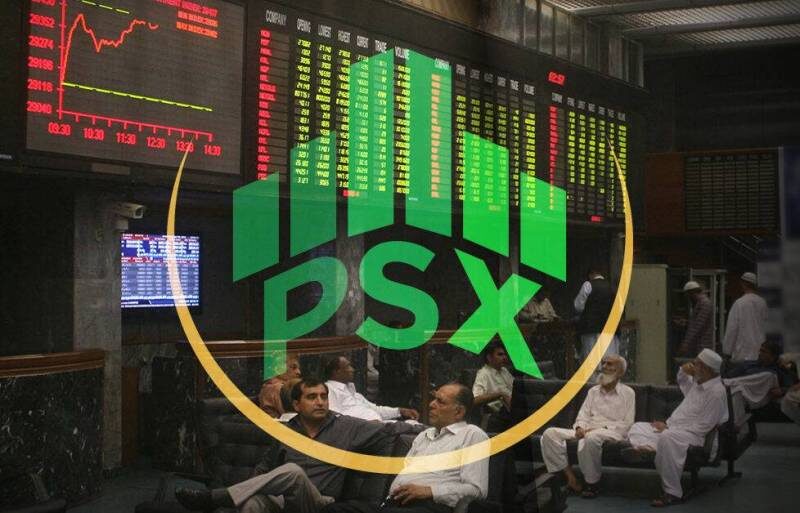
The newly launched Capital Market Development Fund (CMDF) is Pakistan’s most coordinated push yet to pull retail investors into the market. For early-stage founders, the implications go well beyond a number on a press release.
Rs. 120MSeed Capital
<1%Pakistanis in Capital Markets
2.5MInvestor Base Target
On May 6, 2026, Pakistan formalized one of its most significant structural pushes in recent financial history. The Capital Market Development Fund (CMDF) was launched at a signing ceremony in Islamabad, bringing together the country’s top market institutions under a single, SECP-supervised mandate: bring more Pakistanis into the capital market — and keep them there.
Federal Finance Minister Muhammad Aurangzeb presided over the event alongside SECP Chairman Dr. Kabir Ahmed Sidhu. The timing is deliberate — launched against a backdrop of regional tensions and a domestic economy navigating its IMF stabilization programme, the CMDF is as much a confidence signal as it is a funding mechanism.
What is the CMDF?
The CMDF is an industry-backed, SECP-supervised fund designed to deepen Pakistan’s capital markets by expanding the retail investor base, improving financial literacy, and strengthening institutional capacity. It is seeded with an initial Rs. 120 million (approximately $430,000) and will be sustained through annual contributions of 1% of revenues from each participating institution.
Five major institutions signed the founding agreement:
Central Depository Company (CDC)
National Clearing Company of Pakistan (NCCPL)
Pakistan Mercantile Exchange (PMEX)
Institute of Financial Markets of Pakistan (IFMP)
According to Dr. Mobashar Sadik, CEO of IFMP, the fund’s work will centre on four pillars: financial literacy, retail investor participation, financial inclusion, and institutional capacity building.
The Problem It Is Solving
Pakistan’s capital market participation problem is not a secret — but the numbers are stark. Despite a sustained bull run that pushed the KSE-100 to historic highs, fewer than one percent of Pakistanis are invested in the capital market. India’s participation rate sits around 5%, and the gap only widens against mature markets. SECP Chairman Dr. Sidhu acknowledged this directly at the launch, calling it a foundational challenge the fund is designed to address.
Pakistan’s financial system has historically been dominated by commercial banks and real estate — two asset classes that absorb private savings but do little to fund the innovation economy. The CMDF is a direct response to that structural imbalance, aimed at redirecting domestic savings toward equities, bonds, and market instruments.
The momentum is already building. In April 2026 alone, approximately 24,000 new investors entered the stock market — largely younger Pakistanis using digital investment platforms. The CMDF aims to institutionalise this momentum, with explicit focus on youth and women as the next wave of retail participation.
The SECP is also streamlining KYC (Know Your Customer) and AML (Anti-Money Laundering) procedures to reduce friction for first-time investors — a critical move in a market where onboarding complexity has historically worked as a deterrent, and one that regulators say will not weaken core safeguards.
“We must rely on our own resources and strengthen self-sufficiency. Capital markets can play a vital role in providing the financing needed for economic independence.”— Finance Minister Muhammad Aurangzeb, CMDF Launch Ceremony, Islamabad — May 6, 2026
The Bigger Picture
The CMDF does not exist in isolation. It is part of a broader financial sector reform agenda tied to Pakistan’s $7 billion IMF Extended Fund Facility approved in 2024. A core condition of that programme is reducing Pakistan’s chronic dependence on external borrowing — and one structural solution is deepening domestic capital markets so long-term infrastructure, renewable energy, and private-sector projects can be financed locally.
Finance Minister Aurangzeb framed the launch explicitly in these terms, connecting stronger capital markets to Pakistan’s post-regional-tensions push for economic self-sufficiency. The message: Pakistan cannot keep looking outward for the capital it needs to grow. The stock market, he noted, has remained resilient even through recent volatility — a sign of improving investor confidence in Pakistan’s economic direction.
What the CMDF Signals for Pakistan’s Startup Ecosystem
- More retail capital in the pipeline. As financial literacy improves and more Pakistanis enter capital markets, the pool of informed, risk-tolerant individuals grows — and that is the same population from which angel investors, crowdfunding backers, and early adopters emerge. A deeper retail investing culture lifts all boats, including early-stage startups.
- PSX becomes a more credible exit route. One of the weakest links in Pakistan’s startup ecosystem is the absence of viable exits. A more liquid, better-populated stock exchange changes that calculation. As PSX participation scales, listing becomes a more realistic — and more attractive — endgame for growth-stage companies.
- Direct tailwind for fintech. The push to digitise investor onboarding, simplify KYC/AML, and reach youth investors through digital platforms is a direct growth opportunity for fintech startups building investment, brokerage, and wealth management products. This is regulatory momentum that creates real market demand — not just policy noise.
- A signal to international capital. Institutional reforms signal seriousness. A government-backed, multi-institution fund targeting market deepening — alongside an active IMF programme — communicates structural intent to international VCs and development finance institutions currently weighing Pakistan exposure.
- Women-led financial inclusion as a funding angle. The CMDF explicitly targets women as an underrepresented investor segment. For startups working in femtech, agritech, or financial inclusion, this alignment creates both product development opportunities and access to grant or impact funding tied to CMDF goals.
None of this is immediate. The CMDF’s Rs. 120 million seed capital is modest — it is an institutional commitment, not a market-moving sum on its own. The real impact will come from what the fund enables: awareness campaigns, investor education, digital onboarding reforms, and the compounding effect of thousands of new market participants entering monthly.
But for Pakistan’s startup ecosystem, the signal matters as much as the scale. A government and financial sector actively working to grow the investor base are also, indirectly, building the conditions for startup financing to mature. The CMDF is one piece of a larger puzzle — and one that founders, investors, and ecosystem builders would be wise to track closely.